Writing · Analysis · Commentary
Rienzi and the Trump Presidency
The Tragedy of the Restorer
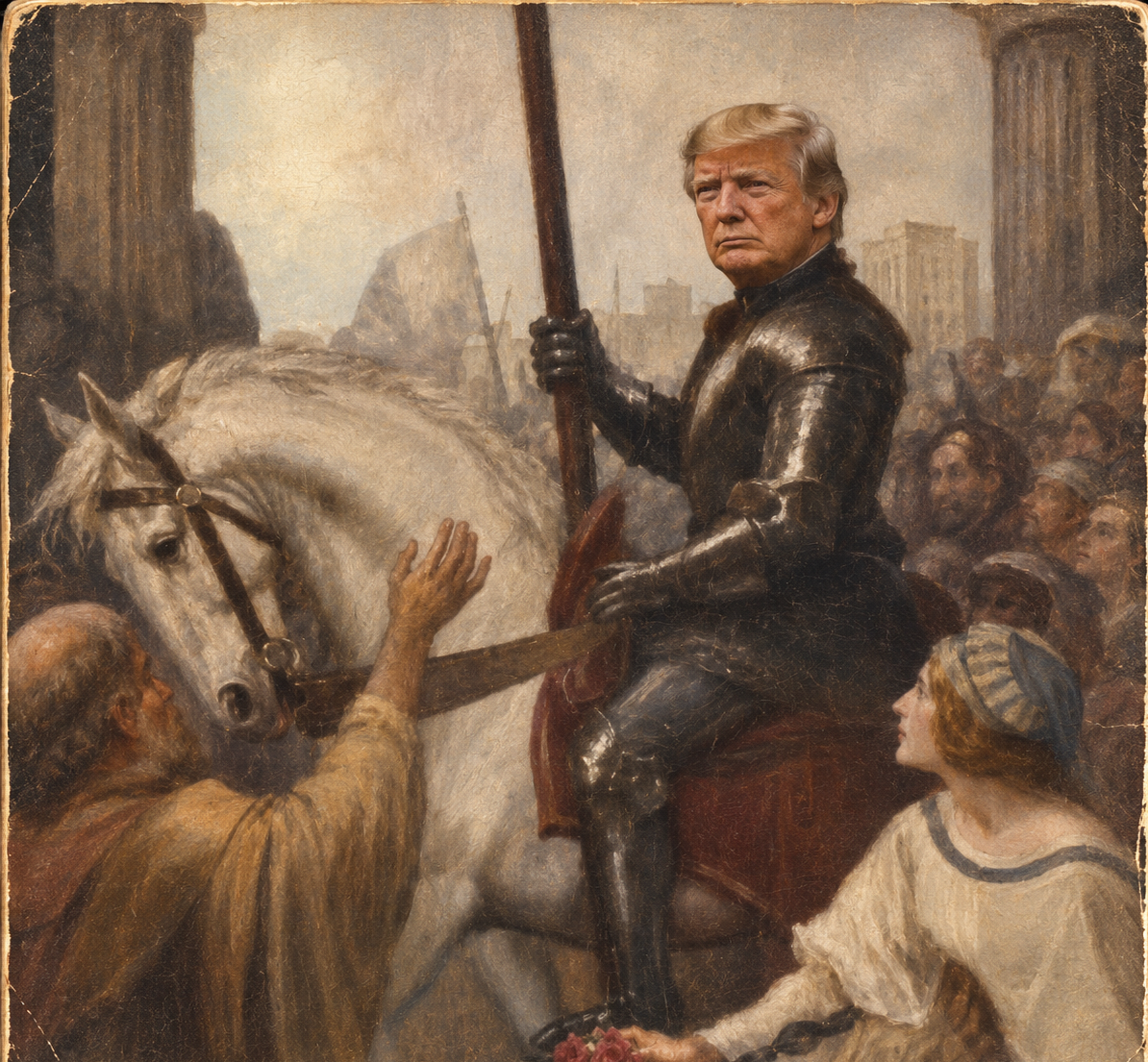
The circumstances that bring a political reformer to power are often the very circumstances that prevent him from accomplishing what he was elected to do.
The greater the dissatisfaction with the existing order, the greater the expectations placed upon the one promising to change it. Yet entrenched interests, failing institutions, accumulated obligations, and a loss of public confidence don’t simply disappear in the presence of a commanding political personality.
It is a contradiction that has troubled republics for centuries. The demand for decisive leadership arises from the failure of institutions, while the success of that leadership ultimately depends upon those same institutions that created or abetted the problems to begin with.
“Life imitates art” - Oscar Wilde
Nearly seven centuries ago, a Roman named Cola di Rienzo confronted this predicament in his attempt to restore the dignity and authority of Rome.
In 1835, English novelist and statesman Edward Bulwer-Lytton published Rienzi, the Last of the Roman Tribunes, recounting the rise and fall of the fourteenth-century Roman reformer. Seven years later, Richard Wagner adapted the story into his five-act opera, Rienzi, der letzte der Tribunen (Rienzi, the Last of the Tribunes), which premiered in Dresden in 1842.
The central political dilemma is remarkably familiar. It is a story of political disorder, popular revolt, triumphant restoration, institutional resistance, and ultimate catastrophe.
The tale also offers an illuminating perspective on Donald Trump’s presidency and the uncertain future of the American republic.
Rome and the Crisis of Legitimacy
By the middle of the fourteenth century, Rome was a city living among the remains of its own magnificence.
The monuments of antiquity testified to a civilization that had once commanded the Mediterranean world. Its laws, armies, roads, institutions, and political traditions had shaped the history of the West. Yet the city itself had become an impoverished and frequently violent prize contested by rival noble families.
The papacy had departed Rome for Avignon in 1309, beginning a nearly seventy-year period sometimes described as the Babylonian Captivity of the Papacy. The relocation placed the pontiff under the perceived influence of the French monarchy and raised profound questions about the independence of the Church’s governing authority.
Rome had been abandoned by the very institution from which it derived much of its remaining importance.
The crisis would eventually culminate in the Western Schism of 1378, when rival popes in Rome and Avignon each claimed legitimate authority as the successor to St. Peter. Although this division occurred after Rienzi’s death, it exposed the fragility of a governing order in which competing factions could no longer agree upon the source of legitimate authority.
In Rienzi’s Rome, rival political factions embodied by the Colonna and Orsini families competed for control. Public authority was fragmented, justice uncertain, and the distinction between government and private power often obscured.
Rome possessed the inheritance of greatness without the means of sustaining it.
Into this chaotic condition came Cola di Rienze, a notary and student of Roman history who believed that the city’s decline was neither natural nor irreversible.
For Rienzi, Rome had not ceased to be Rome. Its people had permitted others to govern in a manner unworthy of their inheritance.
In May 1347, Rienzi led a popular movement that displaced the prevailing aristocratic government. He assumed the title of tribune, invoking the ancient Roman office established to defend the plebeians against the power of the patricians.
He promised public order, impartial justice, civic dignity, and the restoration of Roman authority.
For a time, he delivered enough to inspire considerable hope.
But the political order he displaced had not disappeared. The nobles retained their wealth, alliances, and influence. The papacy possessed an authority that popular enthusiasm could not extinguish.
Rienzi had captured the imagination of the people. He had neither abolished nor successfully reconstructed the institutions upon which their government depended.
The Promise of Restoration
Nearly seven centuries later, Donald Trump emerged from an altogether different republic with a political proposition containing an unmistakable echo.
Make America Great Again.
Four words whose effectiveness rested upon a simple premise: America had been greater, had declined from that condition, and could be restored.
The appeal extended beyond the familiar disputes over immigration, trade, manufacturing, and national security.
Trump challenged the judgment and authority of the political establishment itself, arguing that America’s difficulties were not inevitable but the consequence of decisions made by those entrusted with its government.
This was a more consequential proposition than the promise of different policies. It suggested that correcting the country’s course required confronting the institutions, interests, and political arrangements that had permitted its problems to accumulate.
In this respect, Trump’s promise of national restoration bore a resemblance to Rienzi’s appeal to the citizens of Rome. Both invoked the greatness of a national inheritance, identified failures of leadership and government as obstacles to its recovery, and presented political change as the means of reclaiming what had been lost.
But beneath both promises lay an assumption considerably more difficult to reconcile with the realities of governing: that the institutions associated with a nation’s decline could become the instruments of its restoration.
Trump’s election in 2016 overturned prevailing political expectations. His return in 2024, following defeat, impeachment, criminal prosecution, and years of sustained political conflict, demonstrated that the movement he had created was neither an electoral accident nor a passing protest.
His supporters now expected something more than another Republican administration. Many anticipated the fundamental reformation of the American governing establishment.
Yet the president is not the American government.
He is the chief executive of a constitutional republic whose powers are divided, whose institutions possess independent authority, and whose political habits cannot be rewritten by presidential instruction.
Yet the republic itself has become increasingly captive to a judicial and administrative order in which courts, lawyers, and unelected experts exercise extraordinary influence over the meaning and application of its laws. Competing interpretations, contradictory rulings, and shifting standards have made the determination of constitutional authority and legislative intent an increasingly uncertain exercise.
The written law remains, but its meaning and application can appear to depend less upon the language enacted by the people’s representatives than upon the judgment of those empowered to interpret it.
Anyone expecting impartial arbitration from referees selected, appointed, and elevated through the very institutions whose authority is being challenged overlooks a fundamental reality of institutional power.
Those entrusted with interpreting and enforcing the rules are themselves products of the established order, with professional loyalties, vested interests, and deeply ingrained assumptions favoring its preservation.
The result is a perpetual game in which the rules are interpreted, enforced, and sometimes rewritten by those whose authority depends upon its continuation. To expect these same institutions to serve as disinterested arbiters when their own legitimacy is the central question at issue requires either a considerable suspension of political judgment or a willing submission to the narcotic comforts of the status quo.
This was the predicament confronting Rienzi.
He could proclaim a restored Rome, command its citizens, issue decrees, and defeat his aristocratic opponents. But his authority rested upon an unstable combination of popular enthusiasm, municipal government, military force, and the provisional acceptance of competing interests.
He could not compel the entire political society of Rome to accept his understanding of legitimate government, nor coerce its institutions into delivering what the people expected.
As President of the United States, Trump possesses far greater formal authority within a far more durable constitutional system.
But Congress retains control over legislation, including whether it advances at all, how it is drafted, amended, funded, or quietly buried through procedural obstruction. The Senate exercises additional authority over appointments and confirmations, while courts adjudicate disputes through interpretations that can differ sharply across jurisdictions and change with the composition of the judiciary.
Meanwhile, states invoke principles of federalism to assert competing claims of authority, often testing the boundaries between constitutionally reserved powers and the supremacy of federal law.
The result is a governing order in which the president may possess an unmistakable electoral mandate without possessing all the institutional means necessary to carry it out. Authority is dispersed among competing centers of power, each capable of delaying, modifying, obstructing, or defeating the policies of the elected executive.
The administration’s efforts to change immigration enforcement, trade policy, federal personnel, and the administrative state have consequently involved executive decisions, litigation, congressional conflict, and disputes over constitutional authority.
An electoral mandate is politically real, but it is not the same as a constitutional amendment.
The Triumph and the Illusion
In Wagner’s second act, Rienzi presides over the celebration of his restored Rome.
The spectacle is magnificent.
The people rejoice. The nobles appear to acknowledge the new order. The tribune stands at the center of a city seemingly delivered from its former misery.
Yet beneath the ceremony, his enemies are conspiring against him.
The triumph is real. The settlement is not.
Rienzi believed that the enthusiasm of the people could be converted into a reconstruction of the political order itself. But the institutions, interests, and rival authorities that had governed Rome remained capable of resisting his restoration.
Trump’s electoral victory returned him to the presidency, but the institutions, competing interests, and entrenched political arrangements he had promised to reform remained firmly in place, each possessing its own authority and the means to resist changes that threatened it.
The election had not produced a national consensus over the future of federal institutions, executive authority, or the economic and political arrangements that should follow.
The presidency could initiate reforms. Their permanence would depend upon something beyond the president’s will.
The Victory That Settled Nothing
Wagner develops the problem further in the third act.
Rienzi defeats the armed nobles.
The confrontation that should have settled the struggle had ended in his favor. Yet his decision to spare his enemies failed to produce reconciliation. His opponents remained unreconciled and unrepentant, while some among Rienzi’s supporters questioned his restraint and his failure to bring those responsible to justice.
The episode invites comparison with the profound demoralization Americans experienced beginning in 2020, as extraordinary government powers were exercised under claims of “necessity,” justified by a declaration of “national emergency” whose legitimacy and continuing justification became matters of profound dispute.
The implementation of what critics regarded as absurd, dehumanizing, and intentionally counterproductive so-called “public orders” met with far too little meaningful resistance. Few possessed even the most elementary courage to question the aberration, speak truth to power, or confront the authorities responsible for imposing them.
What so deeply wounds is the memory of egregious violations of constitutional and natural rights under color of authority, which almost no one had the courage to confront, let alone name.
Measures defended as “temporary necessities,” resting upon assertions that critics regarded as unfalsifiable and logically indefensible, inflicted damage upon the limits of government authority, the protection of individual rights, and the expectation that those exercising the coercive power of the state would themselves be held accountable under the law.
Instead, the very institutions responsible for enforcing these measures remained among those entrusted with determining the legitimacy of their own conduct.
The restrictions, usurpations, and acts of what many experienced as life-destroying tyranny inflicted consequences extending far beyond the initial emergency declarations. Economic hardship, stagnation, disaffection, and profound public distrust remain defining elements of daily life for many Americans.
The rejection of incumbent political power reflects, in part, a rejection of an institutional order whose demands for compliance helped produce conditions it has yet to remedy.
That Trump should return to the presidency in 2025, following the extensive destruction wrought by measures he himself had permitted to begin under his first administration, presented a remarkable political contradiction.
Having witnessed the consequences of acquiescence, and the merciless hatred returned for acts of restraint and clemency, Trump and his supporters had every reason to recognize that a narrow opportunity for fundamental change existed.
The extraordinary powers exercised by institutions ostensibly accountable to the president had demonstrated the reach of government authority.
The expectation was that his second administration would accomplish something considerably more consequential than renewed pontification or the replacement of administrative personnel.
A new Trump presidency, supported initially by Republican majorities in both houses of Congress, was expected to right wrongs, reset the nation’s trajectory, restore the limits of legitimate authority, and secure redress for injustice through the laws intended to protect the rights of the people.
The promised reckoning has never materialized.
Those held responsible by critics of the emergency measures have largely escaped the accountability those critics demanded, while the institutional arrangements that permitted the disputed actions remain substantially intact.
What one generation might have drawn the sword to resist, another has become willing to abide. The danger lies in the lesson such acquiescence teaches those entrusted with public authority: that extraordinary power may be exercised without meaningful accountability, provided sufficient political protection exists.
A fundamental reordering of the relationship between the American people and their government remains the true question at hand.
In this sense, electoral, political, and even legal victories cannot, by themselves, resolve the conditions that produced the original conflict.
Only a transformation of the people themselves, through the exercise of their independent initiative, the recovery of civic courage, and the force of their own will, can prevent further corrosion or offer any hope of leaving a more just society to the next generation.
A tribune or a president can temporarily redirect the attention and energies of the people without permanently changing the governing order.
And a restoration that depends entirely upon the continued presence of its restorer remains perpetually unfinished.
When the People Withdraw
In Act IV of Wagner’s opera, Rienzi confronts a far greater threat to his authority as the people who once elevated him to power begin to withdraw their allegiance.
The Roman nobility had never accepted Rienzi’s authority, but their opposition now found powerful allies within the Church. When the ecclesiastical authorities pronounced his excommunication, the tribune suffered a devastating loss of religious and political legitimacy.
In a society where the Church’s authority was inseparable from public life, its condemnation helped turn the very citizens who had elevated Rienzi to power against him. His popular mandate could neither confer nor revoke the authority of the Church, and once that authority was turned against him, his political victories offered little protection.
Trump returned to Washington with a mandate to challenge the established order, only to confront a governing apparatus whose authority, privileges, and institutional loyalties remained substantially intact.
The same political and legal establishment whose conduct had helped provoke the demand for reform would now sit in judgment of the reforms themselves.
The 2026 midterm elections introduced a further complication. Republican setbacks diminished the political support available to Trump’s administration, although the results alone cannot establish how much reflected dissatisfaction with the president and how much the failure of his supporters to participate.
Trump now confronts the difficult task of making his promised restoration endure amid political opposition, institutional resistance, and the constitutional limits of his office.
Rienzi discovered that the enthusiasm which brought him to power could not protect him indefinitely from the institutions and interests whose authority survived his triumph.
Trump must confront the question of how much of his promised restoration can survive the eventual passing of his own limited authority.
The Burden of Expectations
There is another side to the Rienzi tragedy, and it concerns the people who placed him in power.
What, precisely, did they expect?
That the noble families would surrender generations of accumulated privilege? That Rome’s political institutions could be restored merely by invoking their ancient names? That civic discipline, public authority, and the obligations of republican government would return with the proclamation of a tribune?
The Romans wanted the dignity of their former republic, but the institutions and civic habits that had sustained that republic could not be recovered by ceremony or command.
Only action, sacrifice, and considerable cost could have realigned Roman society toward restoration. Yet these were the very qualities that had slowly corroded in the hearts of the people themselves.
For Americans, the questions are no less demanding.
Can decades of accumulated debt, wasteful expenditure, and dependency-producing government programs be reversed without difficult decisions about taxation and spending?
Can industrial capacity be rebuilt without access to investment, skilled labor, modern infrastructure, and the time such an undertaking requires?
Can a vast federal government be fundamentally reorganized toward securing rights rather than eroding them without confronting the statutes and political interests that created the conditions requiring reform?
The expectation that a sufficiently determined president can resolve these contradictions confuses political leadership with the capacity of the entire nation to reform itself.
One man, one election, one term in office cannot reverse the accumulated weight of an ever-growing and increasingly intrusive government.
Self-government requires citizens to recognize that public policy involves competing goods, unavoidable costs, and obligations that cannot always be transferred to someone else.
National greatness has far more to do with where the people themselves choose to direct their energies and commitments than with the allegiance or expectations they place in any one man.
The Roman Republic had not achieved greatness merely because it possessed great resources, great fortune, or great men. Its authority rested upon laws, institutions, military obligations, civic discipline, and traditions of public duty.
By Rienzi’s time, the monuments had survived, but the culture, values, and habits that had produced them had not.
The Final Act
Wagner’s Rienzi ends in fire.
Abandoned by the people who once acclaimed him, the tribune retreats to the Capitol.
His appeals can no longer recover their allegiance. The Capitol is set ablaze, and Rienzi perishes amid the destruction of the political order he attempted to restore.
The historical Rienzi met a similarly violent end, though not under the circumstances Wagner portrayed. Returning to Rome in 1354 under papal authority, he was killed during an uprising against his government.
Wagner’s conclusion offers no reliable prediction of the end of Trump’s presidency. America is not medieval Rome.
Its constitutional institutions possess a strength and continuity that Rienzi’s improvised government never enjoyed.
A president may lose congressional support, suffer judicial defeats, and leave office amid bitter political conflict while the constitutional order continues. But the preservation of the republic’s founding principles cannot be taken for granted. It depends ultimately upon a meaningful effort to restore the public trust upon which legitimate government rests.
The historical theme carries a warning about the danger of confusing the fortunes of a leader with those of the nation.
“It is better to trust in the LORD than to put confidence in man. It is better to trust in the LORD than to put confidence in princes.” — Psalm 118:8–9 (KJV)
We the people, whose trust rests in God, still believe in the restoration of constitutional order and public trust. But those who place their faith in a single man must eventually confront the limits of his authority and what he alone can accomplish.
His opponents risk an equally consequential error in believing that his departure will somehow resolve the conditions that brought him to power, leaving the underlying causes of political instability untouched.
Both assumptions misunderstand the relationship between the people and their government, and between a republic and its elected leaders.
Trump’s second presidential term ends in January 2029 (the Twenty-Second Amendment prevents him from being elected to a third). The question of succession is therefore unavoidable.
The 2026 midterms have exposed the vulnerability of a political movement whose extraordinary success has depended so heavily upon the personal leadership of Donald Trump. Republican defeats have diminished his party’s governing authority and raised serious questions about its ability to sustain the political coalition he assembled.
The task confronting Trump is now considerably more difficult. With his time in office running short and congressional opposition strengthened, the opportunity to convert his promised restoration into enduring institutional reform has narrowed.
The policies and changes that depend principally upon his executive authority remain vulnerable to reversal, while the Republican Party must confront the prospect of political life without the man who has dominated it for more than a decade.
The measure of a political restoration is not simply what its leader accomplishes while exercising power. It is what survives when that power passes to someone else.
What Remains of the Restoration?
The political struggle will not end with Trump.
The nation’s serious long-term problems will remain, along with the disputes over the meaning of citizenship, industrial capacity, economic competitiveness, trade, federal authority, and the proper responsibilities of government.
The institutional interests that preceded his presidency will survive it, as will the political divisions and public distrust that contributed to his rise.
The Democratic Party will inherit its own difficulties. Opposition to Trump has provided a powerful organizing principle, but the departure of a political adversary offers no remedy for the conditions that made his leadership attractive in the first place.
Even the most well-intended promises, if unattainable, impose unjust burdens upon future generations, or favor one segment of the population at the expense of another, cannot provide a durable foundation for government.
Nor can the Republican Party assume that the extraordinary political coalition Trump assembled will endure without him. Its future will depend upon whether the movement can establish principles, leadership, and a governing purpose capable of surviving the man who brought it together.
The demand for restoration may well outlive the restorer, and therein lies the enduring significance of Rienzi.
The tribune was, in considerable measure, a consequence of Rome’s disorder. His rise demonstrated the depth of public dissatisfaction with the existing order, while his fall exposed the inability of personal authority to overcome the institutional failures and civic divisions that had made his ascent possible.
Rienzi’s failure revealed the deeper tragedy of a Rome that had surrendered responsibility for its own restoration to the man it had summoned to accomplish it.
There is a danger in expecting extraordinary men to accomplish what an unwilling citizenry will not undertake for itself.
Americans have become accustomed to demanding courage, judgment, and determination from their leaders while tolerating failures of those same virtues in the institutions and civic life of the country, and too often accepting their diminishment within themselves.
The restoration of a republic requires more than replacing a government or summoning another leader. It requires recovering the principles by which government is restrained, the obligations by which citizens govern themselves, and the conviction that liberty carries responsibilities no elected official can discharge on their behalf.
The institutions of government may survive long after the principles that justified their creation have been neglected.
Rome knew something of this distinction. Its monuments outlasted the civilization that built them.
America’s constitutional inheritance is no less dependent upon the character and vigilance of those entrusted with its preservation.
Trump will be on stage when the curtain finally falls, but the American republic must continue.