Writing · Analysis · Commentary
Succession and the Question of Legitimacy
What the debate over Iran’s next Supreme Leader reveals about the long-term trajectory of the Islamic Republic of Iran
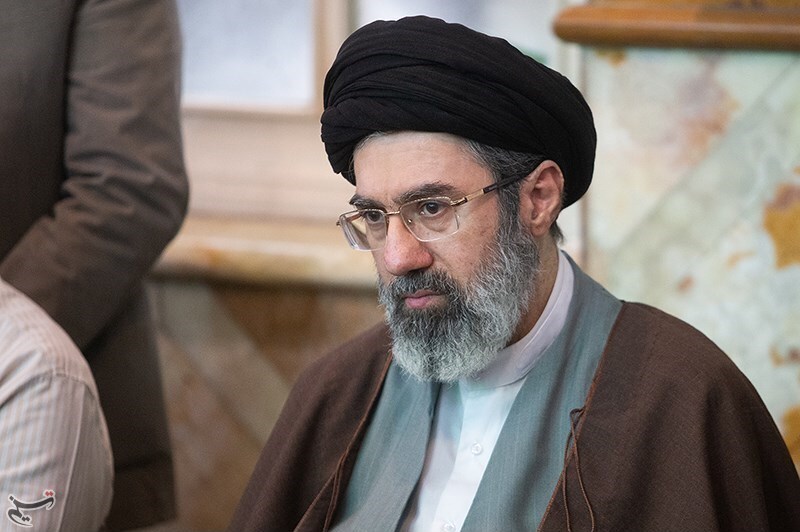
Iran’s Assembly of Experts has now selected Mojtaba Khamenei, the son of the late Supreme Leader Ali Khamenei, to assume the office — a decision that has intensified questions about hereditary succession within a regime founded in explicit opposition to monarchy.
Every political system rests on an answer to a simple but decisive question: who has the right to rule, and why?
Different civilizations have answered that question in very different ways.
For centuries, European monarchies grounded political authority in hereditary succession and divine sanction.
The French king Louis XIV famously expressed this doctrine of absolutism in the phrase “L’État, c’est moi” — I am the state.
Under this model of absolute monarchy, the authority of the ruler and the authority of the state were understood to be inseparable.
Legitimacy flowed downward from the throne, justified by the doctrine of divine right, which held that royal authority reflected an order established in the metaphysical realm and expressed in the temporal world.
Yet monarchy was not the only way societies attempted to justify political authority. The upheavals of the modern era produced a different model of government: the revolutionary state.
Revolutionary regimes reject hereditary rule but often replace it with an alternative appeal to unquestioned authority.
Instead of divine right, such regimes ground legitimacy in ideology, claims of historical destiny, or the asserted moral authority of a revolutionary movement. Authority no longer flows from a king but from the doctrine that animates the revolution itself.
When revolutions emerge apart from the Enlightenment principles of reason, individual rights, and limited government, they often produce systems of authority that concentrate power rather than restrain it.
Rather than grounding legitimacy in lineage, theology, or ideology, the American founding located political authority in the people themselves, deriving government’s power from the consent of the governed and the rule of law.
Writing in the seventeenth century, the English philosopher John Locke argued that legitimate government rests on the consent of those who are governed, and that rulers who violate that trust forfeit the moral basis of their authority.
The American founders placed this principle at the center of their political order. Government was not to be the personal possession of rulers nor the instrument of an ideological mission.
As George Washington explained in his circular letter to the states in 1783, “Government is not reason; it is not eloquence; it is force. Like fire, it is a dangerous servant and a fearful master.”
Government was therefore understood to arise from the practical necessities of human society — the need for order, cooperation, and the preservation of shared values.
It was intended to be a limited institution established to secure the rights and safety of the political community, not a vehicle for abstract ideological claims or the unchecked exercise of power.
As the United States Declaration of Independence states with unmistakable clarity, governments derive “their just powers from the consent of the governed,” and when those powers are abused, the people retain the right to alter or abolish the political order itself.
This conception of legitimacy marked a profound break with older systems of rule.
Authority no longer flowed downward from monarchs claiming divine order, nor from revolutionary movements claiming historical destiny. It flowed upward from the political community itself.
Not all political systems accept that principle.
Some regimes claim legitimacy not from the governed but from doctrine, dogma, or divinely asserted authority.
Whether expressed through ideology, revolutionary authority, or religious guardianship, such systems maintain that a comprehensive worldview entitles their leaders to rule.
Political authority in such systems is justified not by the consent of citizens but by the claim that the regime embodies the proper ordering of society itself.
The result is a form of circular justification in which authority validates doctrine and doctrine in turn validates authority.
Power is therefore treated as evidence of legitimacy, later reinforced by religious, ethnic, or historical narratives that present the ruling order as both necessary and justified.
The Islamic Republic of Iran rests on precisely this foundation.
Born out of the revolution of 1979, the Islamic Republic institutionalized this conception of authority through the doctrine of velayat-e faqih — the guardianship of the Islamic jurist. Under this framework, ultimate political authority does not rest with elected institutions but with the Supreme Leader, a senior clerical figure vested with the responsibility of interpreting Islamic law and directing the state.
The durability of such a system therefore depends heavily on the perceived legitimacy of the clerical authority who occupies that position.
In such a system the authority of the state becomes inseparable from the authority of the cleric who occupies its highest office.
When the credibility of that figure is questioned — whether on theological, political, or personal grounds — the regime cannot easily appeal to elections, institutions, or public consent to restore legitimacy.
That reality now hangs over the question of leadership succession in Iran.
In recent discussions with regional media outlets, including an interview with Al Qahera News, I addressed the question of leadership succession in Iran and the contradictions it reveals within the regime’s professed institutional foundations.
The succession question now confronting the Islamic Republic brings those contradictions into clear view.
Having never previously held formal government office, Mojtaba Khamenei also possesses limited theological credentials compared with senior clerical figures who might ordinarily be expected to occupy such a position.
The appointment itself advanced through a non-traditional clerical process distinct from the procedures that historically conferred legitimacy upon the office. At the same time, several figures long regarded as potential successors appear to have been passed over in the process.
Both the manner of selection and the individual chosen raise uncomfortable questions for the regime, revealing the growing influence of internal power networks within a system that once claimed to reject dynastic authority.
Compounding these concerns are longstanding allegations of corruption and personal enrichment among elements of the ruling elite.
Reports have circulated for years that members of the Khamenei family control substantial assets abroad, including claims that real estate holdings in London alone exceed $100 million, alongside access to vast financial resources accumulated through decades of exercising political authority in Iran.
Such allegations sit uneasily beside the revolution’s original claims of religious austerity and moral purification — principles that formed a central pillar of the regime’s moral legitimacy in 1979.
Taken together, these developments raise a fundamental question: whether the system established in 1979 continues to operate according to the principles that once justified its authority.
The Foundations of Revolutionary Legitimacy
The Islamic Republic emerged from the revolution of 1979 as a political system claiming a distinctive source of authority.
Unlike constitutional democracies, where legitimacy flows upward from the citizenry, the Iranian system placed ultimate political authority in religious leadership.
Because the system rests on the doctrine of velayat-e faqih, the legitimacy of the state becomes inseparable from the religious credibility of the cleric who occupies the office of Supreme Leader.
At the time of the revolution this structure served a central purpose in the regime’s narrative.
The new regime presented itself not simply as a political alternative to the monarchy it replaced, but as a moral and religious corrective to what it portrayed as the corruption and decadence of the Shah’s rule.
The revolution’s leaders rejected not only the monarchy itself but the broader principle of dynastic authority.
Power, they argued, should no longer pass through hereditary succession or personal privilege. Instead it would rest upon religious scholarship, revolutionary commitment, and moral authority.
The Institutionalization of Revolution
Revolutionary systems never remain static. As George Orwell observed, “All revolutions are failures, but they are not all the same failure.”
Over time revolutions consolidate into governing institutions, and movements that once overthrew established authority begin to reproduce the same structures of power they originally sought to dismantle.
Movements born in moments of upheaval must eventually confront the practical demands of governing a complex modern state. As revolutionary governments mature, the sources of authority that sustained the founding generation — personal prestige, revolutionary credentials, or religious stature — become increasingly difficult to replicate.
Leadership succession therefore becomes a particularly sensitive moment. It tests whether the legitimacy once embodied in the founders of a revolutionary system can be credibly transmitted to those who follow them.
In Iran, that question has now come sharply into focus.
Signs of Institutional Strain
Iran’s leadership has maintained power through domestic repression while policies of regional confrontation and international isolation have limited economic opportunity for the country’s younger generation.
Critics of the regime have pointed to broader concerns regarding the conduct of elements within Iran’s ruling elite.
For years, opposition groups and outside observers have raised allegations regarding corruption, the accumulation of personal wealth, and the economic privileges enjoyed by figures connected to the political system.
Whether or not such claims can be verified in specific cases, they contribute to a wider perception that portions of the revolutionary leadership class have developed interests distinct from those of the society they govern.
For a political system founded in explicit opposition to dynastic privilege, such perceptions carry symbolic weight.
This raises the broader question internally as to whether the ideals that animated the revolution of 1979 continue to guide the system in practice, or whether the realities of long-term governance have gradually reshaped the character of the regime itself.
“Revolutionary regimes rarely collapse because their enemies defeat them. They weaken when the distance between their founding ideals and their governing practices becomes too wide to sustain legitimacy.”
The Long Arc of Revolutionary Systems
Even under sustained military pressure, revolutionary regimes rarely collapse simply because their enemies defeat them on the battlefield.
More often they attempt to adapt and gradually transform as the generations that created them pass from the scene. The scale of the damage now confronting Iran, however, may make such adaptation far more difficult.
As this process unfolds, the distance between a revolution’s founding ideals and its governing practices can widen. When that gap grows large enough, the internal cohesion of the system itself begins to strain.
The debate surrounding leadership succession in Iran therefore carries significance beyond the question of who may ultimately occupy the office of Supreme Leader.
It raises a deeper question about the trajectory of the revolutionary system itself.
The damage sustained by Iran during the past two weeks has only intensified that uncertainty.
In a political order already confronting questions of legitimacy and succession, the capacity of the system to reproduce credible leadership now appears far less certain than it once did.
Should Iran’s future leaders seek a more stable and constructive path forward, doing so will likely require a serious reexamination of the governing assumptions that have shaped the Islamic Republic since 1979 — including whether those structures remain compatible with the demands of the modern world and the aspirations of the Iranian people.
Political systems ultimately reveal their character in moments of succession. They expose whether authority rests in institutions, in doctrine, or in the individuals who claim to embody them.
For observers both inside and outside Iran, the outcome may reveal whether the Islamic Republic continues to see itself primarily as a revolutionary state — or whether it is becoming a political system shaped increasingly by the practical imperatives of survival.