Writing · Analysis · Commentary
The Padded Republic
Safety, risk and the slow surrender of personal responsibility
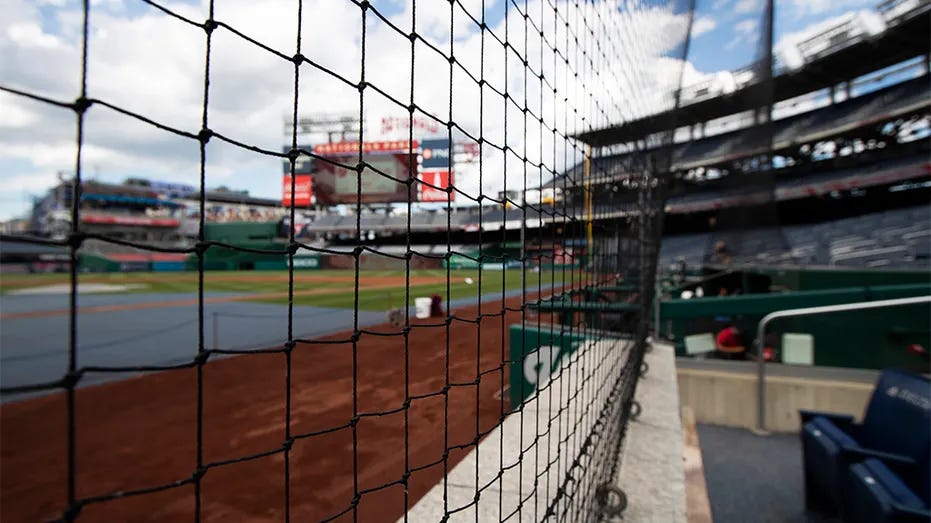
Sit close enough to the field at a baseball game and you accept a peculiar bargain.
For generations, the bargain was obvious.
A spectator could sit safely farther from the field, or high enough in the grandstand that a line-drive foul ball posed little danger. Or they could sit close to the action, where the crack of the bat sounded different, players seemed almost within reach, and a baseball or broken bat could occasionally come screaming into the seats.
The ticket carried a warning, announcements reminded spectators to remain alert. Ushers were present, alternative protected seating was available…and then there was the most primitive and rational safety device of all: paying attention.
Look at photographs of old American ballparks and what’s striking is not just the absence of protective barriers. It is the intimacy, the energy, the connection to the time and place.
Spectators lean over railings. Children peer toward players. Fans and participants occupy almost the same physical world.
The nanny state and its allied armies of attorneys, activists, and ninny scolds have gradually redesigned that world into oblivion.
One woman’s protective net is another man’s restrictive cage.
In 2015, Major League Baseball recommended extending protective netting to cover field-level seats between the near ends of the dugouts and within 70 feet of home plate.
Commissioner Rob Manfred explicitly described the problem as a balance between fan safety and the “proximity and access” integral to experiencing baseball. By 2019, some clubs were extending netting nearly to the foul poles.
The reasons offered for doing so reject more than 100 years of consistent cultural precedent and open viewing at American ballparks.
Somehow, in the 1950s, 1980s and 2000s, no one thought it necessary to enclose nearly the entire viewing public behind a vision-distorting barrier while simultaneously charging spectators ever more for the privilege of sitting close to the field.
Unquestionably, a screaming foul ball can, under rare circumstances, cause catastrophic injury. A small child cannot reasonably be expected to calculate that risk, but parents are responsible for their children, or at least they should be. An attentive adult sitting close to home plate may have very little reaction time—but neither does a player on the field.
Consider the principle involved. Why are inattentive children and irresponsible parents sitting in areas of known vulnerability in the first place? Protected seating already exists and can be selected easily. Warnings are present and are given. Ushers can intervene. Fellow fans can speak up. Adults can choose to pay attention instead of texting or scrolling on their phones.
Responsibility does not need to begin and end with the institution.
God forbid, but a child could also climb over the railing of an upper deck. Ballparks could make that less likely with massive railings, then glass, then netting—perhaps mandatory seatbelts at the ballpark? Stairs could be redesigned. Alcohol could be prohibited. Every spectator could be assigned a safer seat farther from the playing field.
Each measure could conceivably prevent an injury. Each can therefore be defended with the same seemingly unanswerable question representing the most insidious self-deluded belief: If it might save just one life, why wouldn’t we do it?
But that question contains no limiting principle.
If the mere possibility of preventing injury is sufficient to justify another restriction, barrier or mandate, the logical destination is not reasonable safety. It is an environment progressively engineered around the least attentive, least responsible and most risk-averse among us—a prison of a select group’s choosing that everyone else is forced to live inside.
The question is larger than baseball.
Essential Liberty
Benjamin Franklin was not contemplating foul balls when he wrote one of the most frequently quoted lines in American history
“Those who would give up essential Liberty, to purchase a little temporary Safety, deserve neither Liberty nor Safety.” - Benjamin Franklin
The quotation came from a 1755 dispute between the Pennsylvania Assembly and colonial governor over financing frontier defense and the tax privileges of the Penn family’s proprietary lands. Franklin and the Assembly objected to sacrificing what they regarded as the rights of Pennsylvania’s freemen to obtain approval for defense funding.
That context matters. Franklin’s sentence should not be reduced to a bumper sticker. The sentence survived because the tension survived. Its application is based on ever present and valid wisdom, a truism valuable to all of life’s circumstances
Civilization requires safety, but Liberty itself depends upon freedom under a self-governing order, meaningful limited laws and protection against violence, not every conceivable harm.
The pursuit of security contains an obvious paradox: carried far enough, protecting people from danger requires controlling the circumstances in which they might encounter it.
If our overriding objective were to eliminate highway fatalities, we wouldn’t permit Americans to propel several tons of steel down freeways at 70 miles per hour or more. Why not install speed bumps on freeways every 500 yards?
More commonly, we allow people to ski, swim, hunt, skateboard, climb mountains, ride motorcycles and even play football.
Every functioning society therefore accepts risk.
The real questions are which risks, how much, chosen by whom, and borne by whom? In a free society, the answer must begin with the individual making the choice—not with the coercive power of institutions to make that choice for him.
When Safety Changes Behavior
Statistically, seat belts save lives, helmets prevent certain head injuries, and machine guards prevent amputations. Sanitation prevents many diseases, just as fire codes reduce overall deaths. Unarguably, modern trauma medicine saves people who once would have otherwise died.
None of that is in dispute. The complication is what happens after we know we are safer.
Safety measures do not operate on laboratory subjects who continue behaving exactly as they did before the protection was introduced. Human beings recognize protection, adapt to it and sometimes change their behavior because of it.
Economist Sam Peltzman’s work on automobile regulation helped generate a long debate over “risk compensation”: the possibility that people alter their behavior when they perceive an environment to have become safer. Subsequent research has found evidence of behavioral adaptation in some circumstances without supporting the strongest claim that people simply offset every benefit of improved safety.
The point is not that seat belts cause accidents or helmets make sports more dangerous. It is that protection changes the environment in which people make decisions.
A driver surrounded by airbags, collision warnings, anti-lock brakes, stability control and several thousand pounds of vehicle may behave differently from a driver who feels physically vulnerable. Even if the technology produces an overwhelming net benefit—and much of it surely does—the calculation cannot end with the first-order engineering effect.
When you see a woman in a massive SUV, unable to navigate a parking lot, driving with her knee while checking her phone, inspecting her makeup in the rearview mirror, and simultaneously attempting to discipline unruly children in the back seat, we should ask whether all the technology designed to make her safer has also changed her perception of the risks she is taking—and, if so, who actually benefits.
Sports make this even more visible.
When Protection Changes the Game
For much of hockey’s early history, players wore little or no head protection. From the Stanley Cup’s beginnings in 1893 through roughly 1960, elite hockey players accepted substantial physical risk while participating in one of the fastest-paced and most exciting sports on earth. The NHL did not require incoming players to wear helmets until the 1979–80 season.
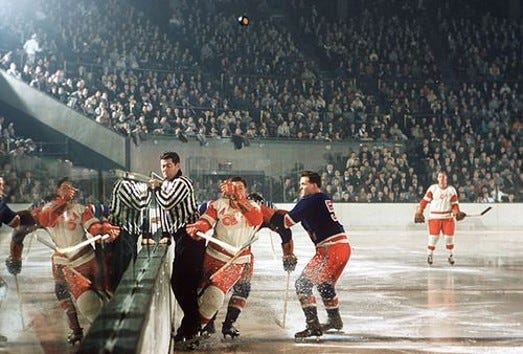
Modern players operate amid vastly better protective equipment. But there was a generation in which the code of conduct, style of play and self-governing limits on how the game was played were directly connected to the vulnerabilities and risks assumed in playing it. Reduce the vulnerability, increase the protection, and eventually you produce a fundamentally different game.
This isn’t to say earlier players were more courageous and modern players more fearful. The game itself changed. Sticks, skates, training, tactics and equipment changed. Players became larger and faster. Curved blades and subsequent stick technology made elevated and deflected pucks a different hazard. Some additional protection represents a rational response to genuinely increased danger.
But protection can also alter behavior. Technology changes risk just as protection changes conduct; conduct produces new risks; new risks produce demands for additional protection. But what was lost may be forever unrecoverable: flow, playmaking, creativity, and the beautiful game.
Football presents the same paradox in more spectacular form. Protective equipment evolved from leather caps to sophisticated impact-absorbing helmet designs while players became larger, faster and capable of delivering extraordinary collision forces.
The response has been yet another layer of rules governing how, when and where one player can deliver a consequential hit, while simultaneously accepting the repetitive collision dynamic that makes the sport exist in the first place.
Eventually every sport confronts a boundary beyond which safety changes the thing being protected. The relevant question is not whether a particular helmet, visor or rule is good or bad. It is whether a culture still knows how to ask what it is trading away each time another layer is added.
Who Is Responsible?
The older American bargain placed substantial categories of ordinary risk upon the person voluntarily encountering them.
You climbed the tree, sat close to the field, rode the motorcycle, entered the ring or played the sport. You assumed some responsibility for understanding what might happen.
That principle was never absolute, nor should it have been. A manufacturer cannot knowingly conceal a defective product and invoke “personal responsibility.” A property owner cannot create a hidden trap or public nuisance and escape responsibility. Children cannot consent as adults do…fair enough.
But something important changes when the question moves from “Did you knowingly accept this risk?” to “Who allowed this risk to exist?”
The lawyer asks whether the accident could have been prevented, a hypothetical abstraction steering the answer into their bank account and some significent percentage less into the hands of the “injured party”.
The insurance company wants another safeguard. The compliance officer writes another procedure. The governing body issues another recommendation. Someone calls it “a best practice”, “guidance”, or “standards”. Soon everyone is expected to follow it creating a law within a law. Eventually what began as a precaution becomes a requirement.
No conspiracy is necessary. Everyone involved can believe they are doing the “responsible thing.”
The incentives nevertheless point overwhelmingly in one direction. An administrator who permits a risk and presides over a catastrophe may face a lawsuit, a television camera and the end of a career. The overseer who eliminates the risk faces almost no comparable reckoning for what was lost.
There will be no newspaper photographs of the child who never developed confidence because he was never permitted independence.
No insurance report will ever calculate the judgment never acquired from exposure to tough circumstances.
No compliance department measures the excitement removed from a sport, the responsibility transferred from a parent, or the competence developed when a young person encounters manageable danger and learns to master it.
The injury is concentrated, visible and attributable. The costs of excessive protection are diffuse, delayed and frequently invisible—perfectly suited for an increasingly overwhelmed population that argues every decision toward the highest imaginable risk and the lowest common denominator.
Surviving is not the same thing as living.
…and the ratchet turns.
The Children We Are Producing
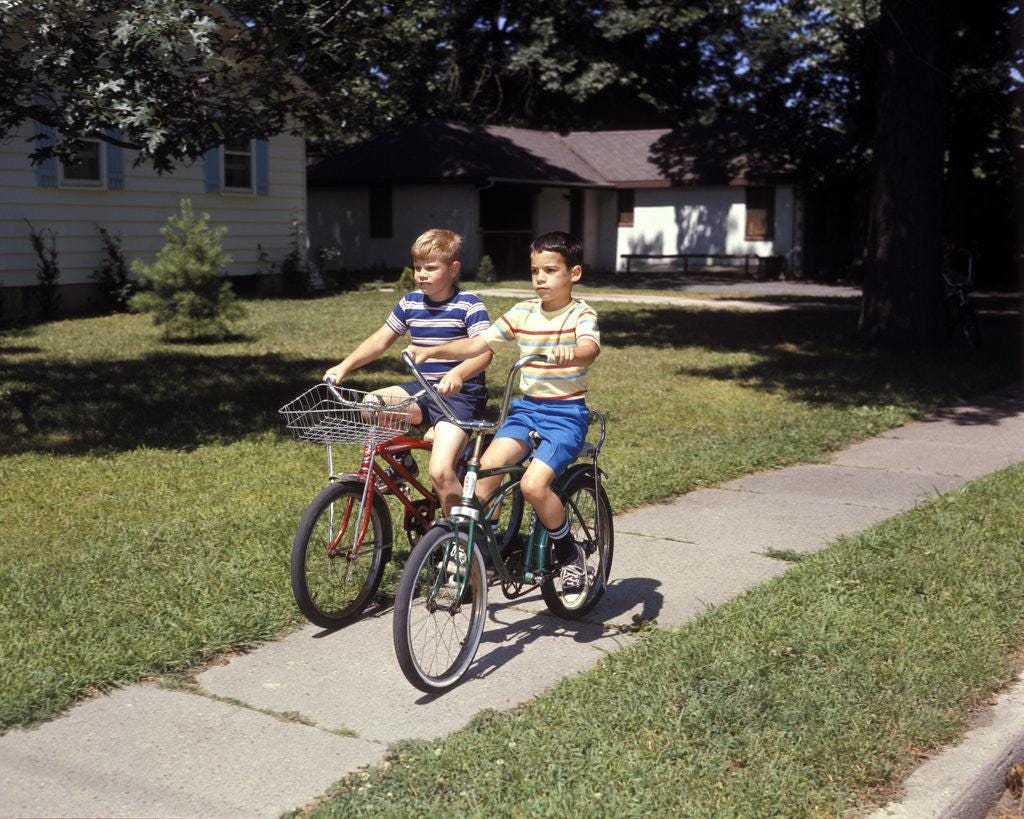
The consequences become more serious when the subject is a child learning how to become an adult.
Not every danger is the same. A child should be protected from dangers they cannot reasonably see or understand. But that is very different from removing every risk they can encounter, evaluate and eventually learn to manage.
A hidden electrical wire on a playground teaches a child nothing. (If you see it, remove it.) …but climbing a tree most certainly does.
So does falling off a bicycle, encountering a creek, a pocketknife, a skateboard ramp, a wrestling match or walking to a friend’s house; getting lost and finding your way home; climbing too high and deciding how to get down; going somewhere without an adult; jumping from something slightly too tall, discovering that gravity is indifferent to good intentions, and deciding whether to do it again.
For much of American history, childhood contained a widening perimeter of freedom. The child demonstrated competence and the perimeter expanded: home became the yard, the yard became the neighborhood, the neighborhood became the town, until eventually the young person left home already possessing years of experience making decisions when no adult was watching.
We have increasingly reversed the process.
Helicopter parents—or, increasingly, “parent/guardians”—supervise every movement because something “might happen.” Go to a local park, stop, watch and listen. No poll testing is required. It is the greatest sociological focus group you can imagine.
Schools prohibit an ever-growing list of activities because someone might be hurt, feel left out or fall down. Thanks to a litigation-obsessed society (and those who profit from it), public organizations regulate nearly everything imaginable because someone might sue. Yet each individual decision can be defended as reasonable.
That is precisely the problem.
No single precaution produces helplessness. A thousand precautions can produce a childhood in which independence becomes abnormal.
Research on risky play confirms much of what earlier generations understood instinctively: children benefit from encountering manageable physical risk. But the larger point should not require a laboratory. Judgment can’t develop without something to judge, courage without something to fear and overcome, or responsibility without something for which to be responsible.
A child prevented from encountering danger will not become an adult skilled at avoiding it. They may instead become an adult who expects danger to have been removed before they arrive, exercising less agency over their actions and less awareness of the consequences of their choices.
Afterall, if the danger wasn’t removed, someone else must be responsible…Time to call the 800 number: "I—or someone else—has “been injured in an accident.”
Clearly, someone other than me must have failed.
The padded playground eventually becomes a theory of government.
Who Governs When We No Longer Govern Ourselves?
There was once another institution standing between the individual and the state: it was called everybody else.
Much of everyday life was governed informally by people willing to exercise judgment and occasionally impose it on one another.
Parents corrected children, neighbors corrected neighbors, coaches disciplined players, spectators dealt with the drunk behind them, and strangers sometimes told one another when they were behaving like fools. This could be intrusive, impolite and occasionally confrontational. Free people can be all three. What it did not require was a regulatory apparatus.
Free people exercising conscience and liberty are the foundation of self-government. Human flourishing depends upon millions of decisions made beneath formal authority—families setting standards, communities signaling expectations, individuals accepting responsibility, and ordinary people possessing enough confidence to intervene when someone around them has plainly abandoned all sense.
As those habits weaken, responsibility does not disappear. It moves upward. The parent looks for a rule, the neighbor calls an authority, and the organization—knowing it will be blamed when something goes wrong—responds with another procedure, prohibition, barrier, warning or edict. Then time does the rest.
The Elephant and the Chain
There is an old story about a young elephant chained to a stake. Too small to break free, it eventually stops trying.
Years later, fully grown and powerful enough to snap the restraint, the elephant remains in place. The chain no longer needs to be strong; the elephant has “learned” that it cannot be broken.
Whether literal fact or parable, the lesson is useful: the most effective restraint may be the one we eventually stop recognizing as a restraint.
A boy who has only watched professional baseball through protective netting does not miss the unobstructed view he never knew. A child raised under continuous electronic supervision does not remember when children disappeared on bicycles for hours and came home for dinner when the street lights came on.
Yesterday’s controversial precaution becomes today’s accepted protection and tomorrow’s unquestioned baseline. Eventually, we lose not only the freedom, but the memory that there was ever a choice to be made.
Alexis de Tocqueville warned that democratic societies could drift toward a peculiar kind of despotism—not necessarily the boot, prison cell or dictator, but an “immense and tutelary power” that gradually undertakes more of life’s decisions for its citizens. The danger is not simply an overbearing state; it is the citizen who finds being relieved of responsibility convenient.
What is sometimes described as the “feminization” of institutions may capture part of the cultural change: less tolerance for aggression, confrontation and physical risk, and greater emphasis on vulnerability, emotional injury, care and protection. But that description alone is inadequate. Affluence, litigation, insurance, professional management, surveillance technology and bureaucratic incentives offer a broader explanation.
Perhaps what we are witnessing is better described as the bureaucratization of vulnerability. A mother protecting her child is human and wonderful, but an institution organized around the proposition that no one under its supervision should ever encounter “preventable harm” is something else entirely. The first has natural limits. The second does not.
What Are We Protecting?
What is wrong with preventing suffering when we can?
Nothing in and of itself.
Prevent the child from touching the live electrical wire. Require the manufacturer to disclose the hidden defect. Punish the drunk driver. Build the bridge correctly. Wear the seat belt. Improve the helmet.
Civilization is partly the story of human beings refusing to accept needless suffering as inevitable. But civilization cannot—and should not—abolish danger, because danger is woven into almost everything human beings value.
The obstacle is the way. But what way remains when every obstacle has been removed?
Liberty itself risks people making terrible decisions. Remove the possibility of the bad outcome completely and eventually you remove the activity that made the outcome possible.
We understand this when the absurdity becomes obvious. We do not prohibit swimming because children drown or mountains because climbers fall. Somewhere beneath the apparatus of modern risk management we still understand an ancient truth: The purpose of life is not merely to survive it, but to live it.
The most risk-averse person cannot be permitted an automatic veto over everyone else’s freedom simply because they can identify something that might go wrong. Nor can institutions assume responsibility for every foreseeable injury without eventually acquiring authority over nearly every foreseeable human choice.
The deeper danger is that as the rules accumulate, the people themselves change. they weaken and calcify into something spiritually less alive, less aware, less human.
Relieved of responsibility, we get less practice exercising it. Protected from consequences, we become less accustomed to calculating them. Taught that preventable harm implies institutional failure, we eventually demand institutions powerful enough to prevent it.
Courage is not recklessness. Prudence is not cowardice. Personal responsibility is not an excuse for negligence.
A free society should prevent needless catastrophe where it reasonably can, but it must also leave human beings something consequential to decide for themselves.
A republic does not merely require safe citizens. It requires capable ones: men and women accustomed to judgment, responsibility, disagreement, consequence, uncertainty and occasionally danger.
We can pad the field, raise the railing, extend the net, add another warning, write another rule, eliminate another collision and supervise another hour of childhood. Every individual step may make somebody marginally safer. The question is what stands at the end of that road.
Because a society can become so determined to protect its people from life that it eventually forgets what all that protection was for.
The purpose of a free society is not to make life safe. It is to preserve a way of life worth taking some risks to live.